
2026 Documentation & Submission Resources
Please note that many of the templates are locked to help prevent inadvertent changes. Should you wish to unlock the files and make your own edits, you can do so by using the password EGC2026.
Documentation Instructions 2026
Master Construction Specifications 2026
Verification Templates 2026
Additional Tools & Resources 2026
2020 Documentation & Submission Resources
Documentation Instructions 2020
- Certification Documentation Instructions, 2020 Criteria
- Certification Documentation Instructions, 2020 New York City Overlay & 2020 New York City Overlay, V2
Verification Templates 2020

Date Posted:

Date Posted:
PDF template for holding Integrative Design charrettes and coordination meetings
Date Posted:
Date Posted:

Date Posted:
Date Posted:
Date Posted:
Also for use with projects following PHI or PHIUS
Date Posted:
Date Posted:
Date Posted:
Date Posted:
Date Posted:
Complete the HPD Solar Feasibility Analysis and HPD Solar Screening Tool available under "Forms and Tools" on the HPD Solar Feasibility webpage
Date Posted:
Date Posted:

Date Posted:
2015 Documentation & Submission Resources
Documentation Instructions 2015
Verification Templates 2015
- 1.1a criterion-1-1a-integrative-design-goal-setting-template
- 1.2a 2015-green-communities-criterion-1-2a-resident-health-well-being-design-health-template
- 1.2b green-criteria-1-2b-resident-health-well-being-health-action-plan-template
- 1.3a criterion-1-3a-resilient-communities-design-for-resilience- template
- 4.2 2015-green-communities-criterion-4-2-option-2 template
- 5.1 5.1 Energy-Model-Building-Cluster-Proposal-Worksheet
- 5.1b & 5.1d criteria 5.1b and 5.1d_certification-energy-performance-report
- 7.12 criterion-7-12-active-design
- 8.5 & 8.6 criteria-8-5-8-6 utility accounts instructions
Research & Reports
Discover new research and practical insights in green building and affordable housing
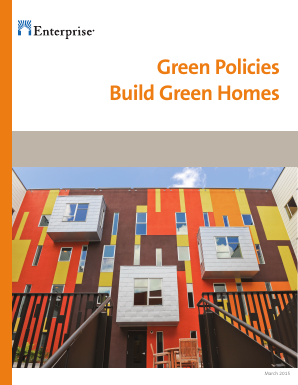
Green Policies Build Green Homes, Green Communities
This report assesses the impact of green requirements on LIHTC allocations with the goal of quantifying the penetration of green building across the affordable housing industry.
2015 Criteria Incremental Cost Survey, Green Communities, Bridgewire Consulting
The purpose of this guide is to provide users of the 2015 Criteria—owners, developers, design professionals, contractors, and others—with industry estimates for the costs of meeting the 2015 Enterprise Green Communities Criteria. For the purposes of this guide, the project team defined incremental cost as the added cost to exceed standard construction practice for the affordable housing industry. It should be noted that this resource is not a cost-benefit guide. All users should consider the positive impacts of meeting the 2015 Criteria and weigh these against the costs estimated in this guide and by professionals working on your project.
Enterprise Green Communities Criteria: Incremental Costs, Measurable Savings Update, Peter Morris, Yianice Hernandez
This update to Incremental Cost, Measurable Savings report illustrates the cost effectiveness of the Enterprise Green Communities Criteria in delivering health, economic and environmental benefits to developers and residents of green affordable housing. For this latest report, Enterprise partnered with Davis Langdon to complete the analysis on an expanded dataset of 52 green affordable housing developments, up from 27 included in the 2009 report.
Greener Housing = Improved Health: A Winning Combination: Design and Specifications by Noreen Beatley
This paper provides background on the relationship between housing and health and, using case studies developed by the National Center for Healthy Housing (NCHH), illustrates how building affordable green housing provides health benefits to its low-income residents.
Utility Allowance Options for Investments in Energy Efficiency: Resource Guide by Yianice Hernandez, Julieann Summerford
This resource increases awareness about adopting, establishing, and offering utility allowance options supportive of energy-efficiency investments in new construction and rehabilitation.
Toolkits
The Step-by-Step Multifamily Retrofit Process
Upgrade existing multifamily buildings with energy-efficient features and systems
Housing preservation, reliable and lower operating costs, improved indoor environmental quality, and reduced carbon emissions: all these benefit multifamily housing properties through retrofit.
Selecting prime candidates for retrofit, aligning funding sources, selecting an audit protocol, ensuring proper implementation, and evaluating results, however, can feel daunting for many portfolio managers. This toolkit distills Enterprise’s experience retrofitting multifamily affordable housing into the critical steps necessary for success. What follows is a roadmap outlining a comprehensive, cost-effiective approach to retrofit for multifamily housing owners, investors, and developers.
How to Use this on-line Toolkit
This step-by-step process can be used in three ways:
- Portfolio Approach - Assists you in developing an action plan to increase the efficiency of your portfolio through selective application of retrofits and related tools
- Project Approach - Assists you in taking one project through a streamlined, cost effective, efficient retrofit process
- Midway through process and/or near completion - Use as a toolkit at any point during the retrofit process in order to make smart and cost-effective decisions
Referenced within the documents are these supporting attachments: